Listening: An Essential Skill
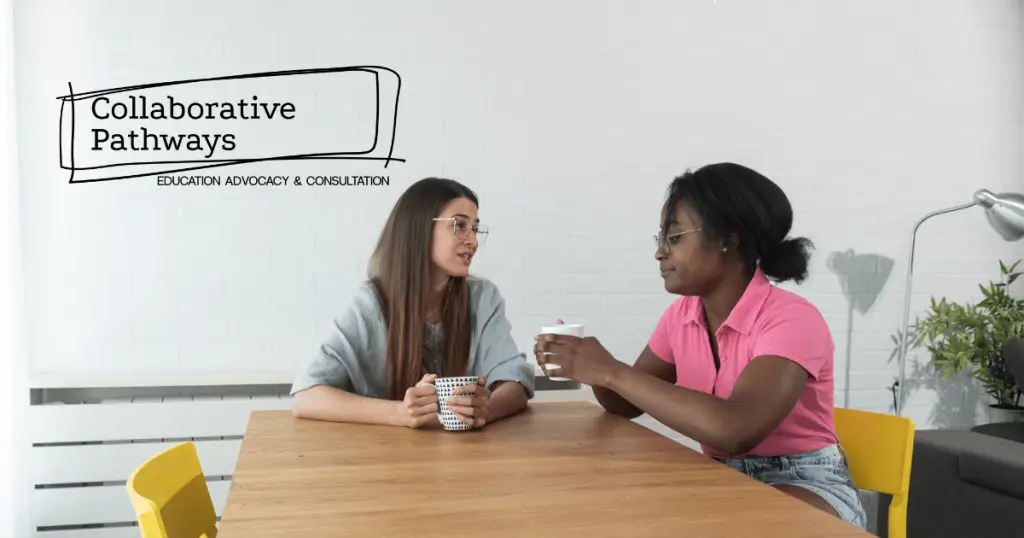
Listening skills are critical for student comprehension. Most of us listen to respond. We tend to filter what we hear through our expectations of the conversation, which changes based on who we’re talking to, when and why. We are thinking about our own thoughts and are ready to pounce with our own reply.
But we can’t understand what is really being said this way. I would argue these are bad listening habits, and generally we all seem to suffer from them.
There is a lot of discussion about the capabilities and efforts of youth at school. I want to recognize that students have a lot on their plate; I mean they are watching the world crumbling around them live on social media and the voices at school are saying “do well at school or you won’t succeed in life!” We also know students come to school with a variety of learning, behavioural and emotional challenges that are diagnosed and require support. Support they are not receiving.
But in this post I would like to suggest that the act of listening is a skill that requires understanding the feedback loop and applying certain techniques. It has to be learned and practiced. When I work with students there are some communication activities that never fail to make students aware of how our own lenses impact our ability to communicate; listening is one part of communication.
We always start with a quick lesson on the feedback loop. It’s quite simple; one person speaks, the other listens, rephrases and offers a response to questions asked. During the rephrase portion, the speaker now listens fully and repeats the process which can include simply include validating the listener or answer the clarifying question. And we go around and around.
The piece we tend to miss is the rephrase, and it can be done in different ways. You could simply rephrase what you heard, “what I am hearing is….”.
It could also be a statement of empathy, “what you described sounds very difficult.” It’s could also be a question, “just to clarify, do you mean that…?”
Realistically, the rephrase can only be done if your goal was to listen to understand.
So how do you prepare to really listen and respond to feedback?
I would argue it starts with a check in. If you need to speak with someone or someone wants to speak to you, both people should be aware of their feelings and thoughts at the time. The classic example, if you’re frustrated or angry or hurt by someone, that might not be a great time to listen, or to speak with someone.
So, check in with yourself: can you take a few minutes, a few breathes? Get control over your body and thoughts and feelings as best you can.
Do you know what you want to communicate and why? And if you’re asking someone to listen, do they have the capacity at that moment? If the answer is no to any of these questions, it’s ok to speak later when you are feeling ready. If someone wants to hear you or be heard, they will understand.
Once we are ready to listen, we need to remind ourselves that not everyone sees the world the same way. When working with students there is one exercise that always engages them in a practical way and really helps them understand how differently we all communicate.
Try it at home. You need three people. One, to find a simple outline image that is unfamiliar to the two other participants, like a simple colouring book page. The two other participants need to sit back to back, one will give directions and the other will draw. It is important that the person drawing does not see the image.
Now the person describing the image must provide details that will help the person recreate the exact same image as best they can. This is where the questions and doubt start rolling in.
“Miss, can I tell them what the image is?”
“How do I explain how to draw this?”
“What details can I share?”
“If I’m drawing can I ask questions?”
And I tell them, you need to say whatever it takes to ensure that the final drawing is as similar as can be to the image.
This is where things get interesting and hilarious (one of the reasons I love working with teenagers). After several frustrating attempts, I give the students an opportunity to share the original image and the drawn picture. They love seeing how well they did, or didn’t do.
And now the actual purpose of the activity can begin. I ask the students to explain their process. Some students just told their partner exactly what the image was. And then the person drawing would ask questions. Some students go from the top to the bottom, giving small details and using items as comparison and of shape and size.
I ask students who were drawing how they felt during drawing and what they wished their partner told them, now knowing what the image was.
We end the activity with a discussion about what variables could impact the quality of communication and comprehension in a conversation between individuals. The activity itself highlights a big picture vs small detailed way of thinking or seeing the world. The students will bring up how their experiences or knowledge could also impact what is said and understood.
So, there are techniques that I give to students to practice during listening activities;
- Have a pen and paper ready to take notes and write down questions.
- Ask lots of clarifying questions, even if you feel like you understand what is being said.
- Use a fidget to help you keep your body busy so you can focus on what is being said.
- Ask for breaks if you need them.
All of these skills are essential for students to ensure they are successful in their courses. But as adults, how often do we apply these skills? Especially as parents or teachers or coaches, caring adults who work with teenagers. Are we coming into important conversations with open minds, clear feelings and the effort needed to listen and understand?
We need to use these skills, especially with our struggling youth. They need to feel heard and validated and part of the solution or at the very least they need to leave a conversation knowing that they are worthy and enough.
So, while we want to see our kids grow and learn and succeed, we can’t expect them to do so without an example to demonstrate how to use these skills.
Collaborative Pathways exist to model and support students under the importance of communication. So many of the struggles they face come from lagging skills like communicating their feelings and needs.
As a caring adult, which listening skills do you feel you can work on to support your relationship with your student? Leave a comment and let me know. Then let’s make a plan together!